A calling shaped by the book of Ephesians
I have always loved the book of Ephesians. It was the first book of the Bible I ever read all the way through. From the moment I read it, one verse stayed with me.
“I therefore, the prisoner of the Lord, urge you to walk in a manner worthy of the calling with which you have been called.” — Ephesians 4:1
That verse has shaped the way I think about ministry and calling. Over the years I have come to understand that walking worthy of the calling God has given me means more than simply doing ministry well. It means stewarding the knowledge, experience, and insight the Lord has entrusted to me and using it to strengthen the church.
I would not be walking worthy of that calling if I kept those things to myself. That conviction is why this initiative exists. The Ephesians Pillars Initiative is simply my effort to share what the Lord has taught me so that churches can build healthier ministries, strengthen their leaders, and faithfully carry out the work God has entrusted to them.
If the church is going to flourish in the next generation, its ministries must be both spiritually faithful and structurally healthy. My goal is to help churches build both.
Founder
Jack Cleveland
Framework Overview
How the ministry development process works
The Ephesians Pillars Initiative uses a clear five-phase framework to help churches move from confusion to clarity and from struggling systems to healthy ministry structures.
1
Ministry Snapshot
Establish clear understanding of current ministry reality, culture, leadership, and foundational ministry data points.
2
Four Pillars Evaluation
Assess discipleship, leadership, structure, and succession to identify strengths, gaps, and areas needing alignment.
3
Ministry Health Diagnostics
Interpret evaluation results to uncover root issues, patterns, and key barriers impacting long-term ministry health.
4
90-Day Priority Builder
Develop focused, actionable steps that bring clarity, direction, and immediate progress to ministry systems.
5
Action Roadmap
Create a long-term plan that guides sustainable growth, leadership development, and generational ministry impact.
Four Pillars
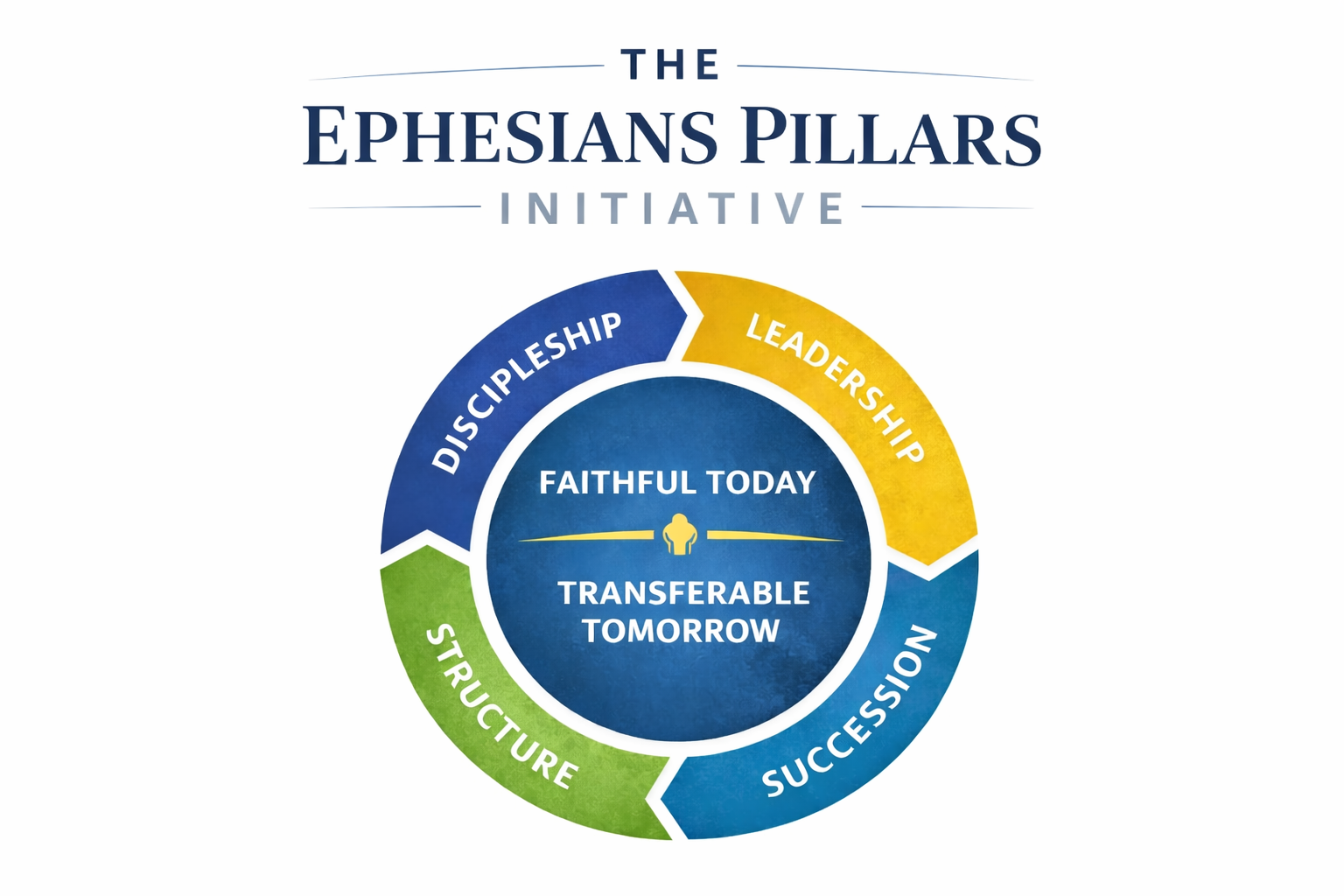
Faithful today. Transferable tomorrow.
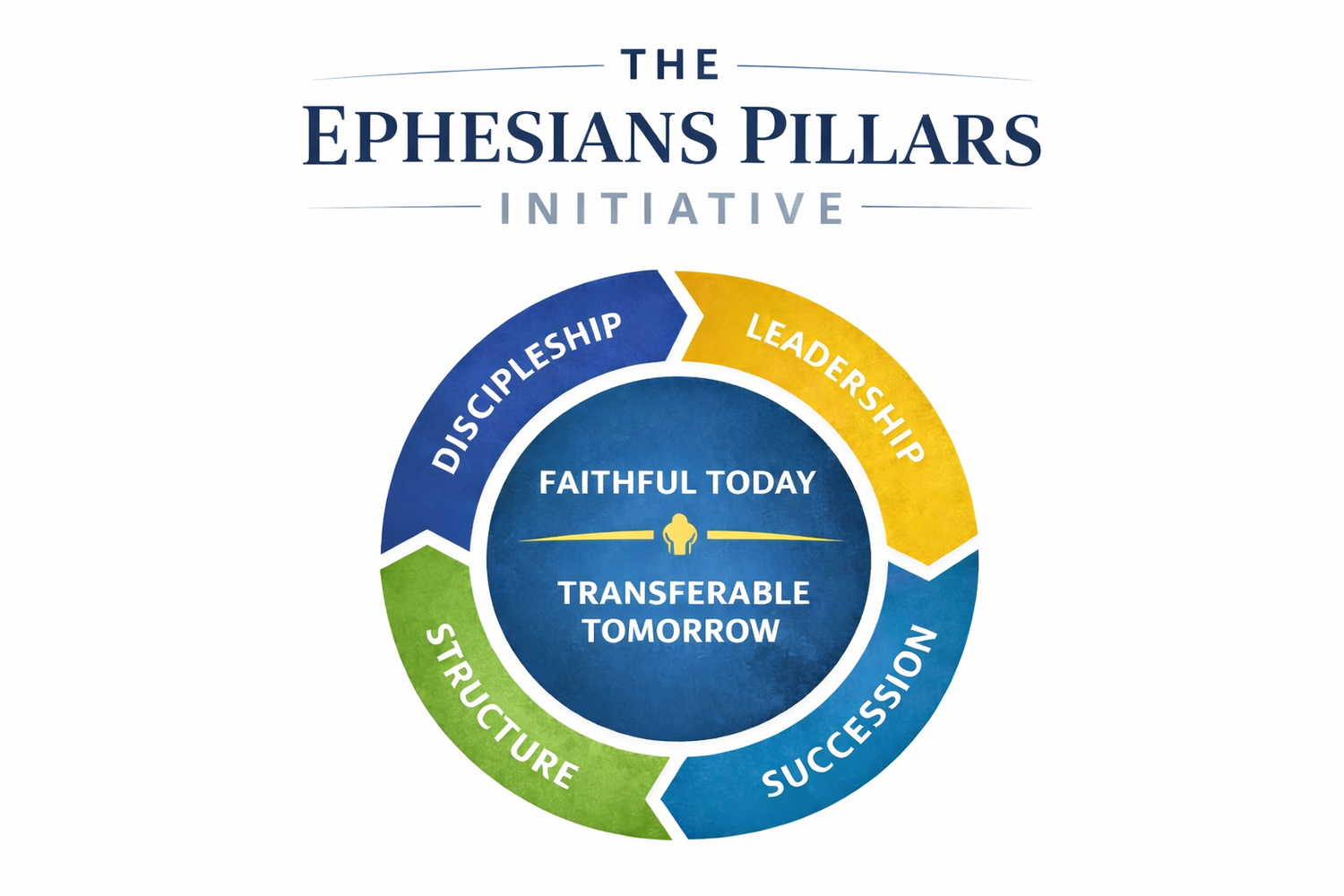
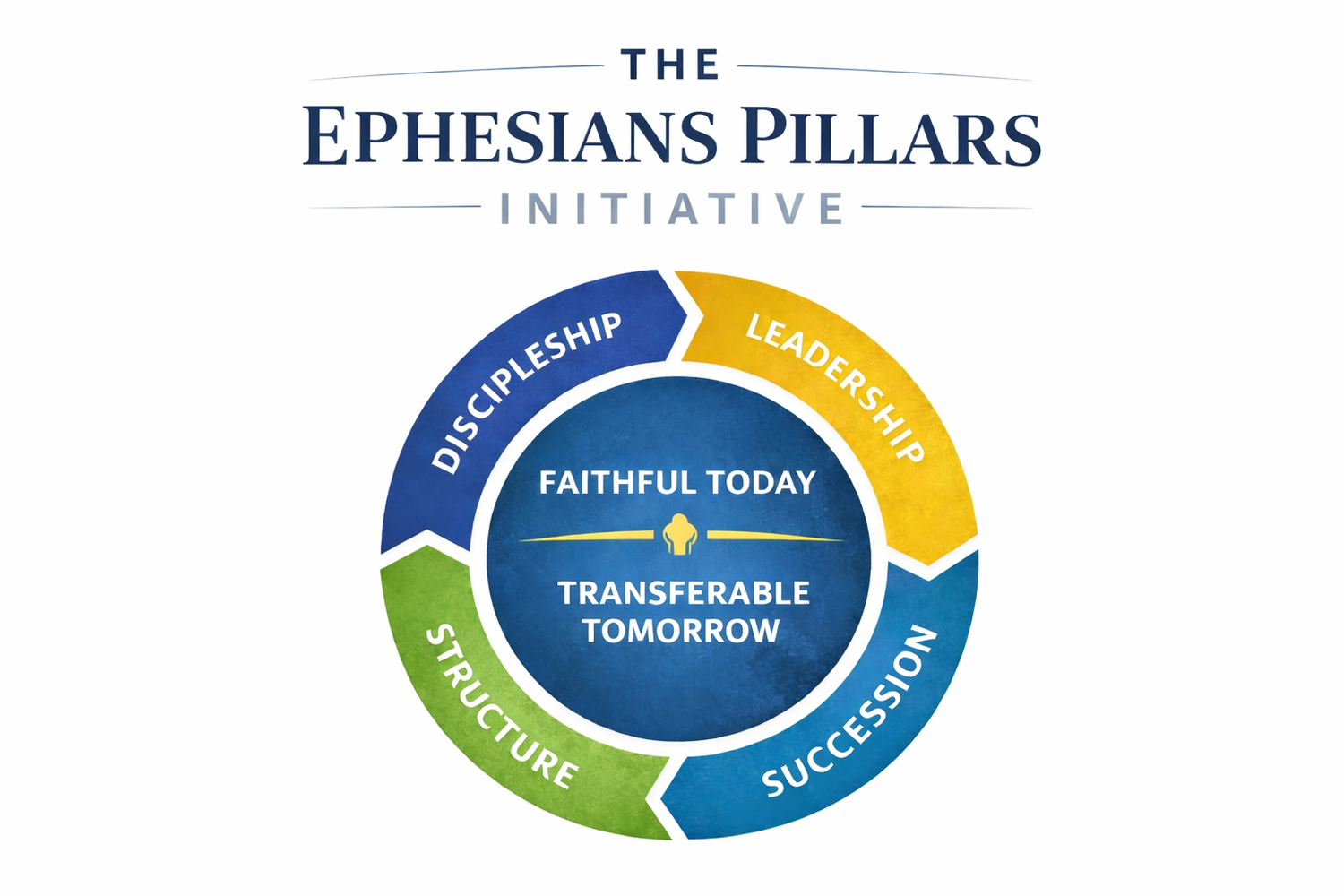
At the heart of the framework are four ministry pillars that help churches build systems that are spiritually faithful in the present and strong enough to endure into the future.
-
Building clear pathways that help students grow in biblical maturity and long-term faithfulness.
Ephesians 4:11–12
-
Strengthening pastors, volunteers, and ministry teams so leadership remains healthy and reproducible.
Ephesians 4:1–3
-
Creating systems, rhythms, and expectations that support ministry instead of working against it.
Ephesians 2:19–22
-
Preparing ministries to remain healthy beyond one season, one strategy, or one leader.
Ephesians 3:20–21
Our Two Pathways
3 Tear Pathway
The three-tier pathway is a guided process designed to help churches evaluate, strengthen, and develop their ministry systems with the appropriate level of support. It begins with clarity—understanding where your ministry currently stands—and progresses into intentional development and long-term implementation.
Each tier builds on the previous one, allowing churches to move at the pace that best fits their needs while still maintaining a clear and structured path toward healthy ministry systems.
Who This Is For
Churches that need clarity, outside perspective, and guided support. This is especially helpful for ministries in transition, struggling to gain traction, or needing structured direction from experienced leadership.
Why Choose This Pathway
This pathway provides clarity and confidence through guided evaluation and development. Churches are not left guessing—they are led step-by-step toward healthier systems, stronger leadership, and sustainable ministry growth.
Guidance designed for real church ministry
Each service is built to help churches move toward healthier structures, stronger leadership, and clearer ministry direction.
Youth Ministry Evaluation
A thoughtful process that helps churches understand the current health, needs, and opportunities of their youth ministry.
Ministry Development
Strategic support for building discipleship pathways, team structures, communication rhythms, and sustainable ministry practices.
Leadership Guidance
Personalized guidance for pastors and youth leaders who want clarity, direction, and healthier ministry systems.
Church Partnership
A church-friendly framework that helps senior leaders, boards, and ministry teams make wise and faithful decisions together.
Handbook Pathway
The Handbook pathway is a build-as-you-go approach that allows churches to develop their ministry systems one piece at a time. Through labs and toolkits, leaders progressively construct a complete ministry handbook that brings clarity, structure, and long-term consistency.
Each lab develops a specific area of ministry, while each toolkit provides the practical tools needed to implement it. Over time, these pieces come together to form a unified and sustainable ministry system.
Who This Is For
Churches that prefer to build at their own pace, leaders who enjoy hands-on development, and ministries that want to create systems internally without relying on outside guidance.
Why Choose This Pathway
This pathway offers flexibility and ownership. Churches build systems that fit their context while gaining tools they can reuse, teach, and sustain long after initial development.
How Labs Work
Labs are not self-guided—they are led by an experienced pastor and ministry leader who walks with you through the entire process. Each lab is designed to help you move beyond ideas and into real ministry development, with clear structure, intentional guidance, and step-by-step progress.
This is not theory. This is a working environment where you will actively build the philosophy, systems, and strategy your ministry needs—while you’re in the room. You are not left to figure things out on your own; you are guided, challenged, and supported every step of the way. By the end of the lab, you don’t just have clarity—you have something you can immediately implement.
Because labs are built around active development, we encourage churches to provide a simple on-site meal. This keeps the day focused, relational, and productive, allowing conversations, ideas, and momentum to continue without interruption.
How Toolkits Work
Toolkits are practical, ready-to-use resources designed to help you implement healthy ministry systems with clarity and consistency. While labs focus on guided development, toolkits put the tools directly in your hands so you can take action immediately.
Each toolkit includes structured templates, worksheets, and planning guides that remove guesswork and bring order to everyday ministry decisions. These are not generic resources—they are built from real ministry experience and designed to be used in real church contexts.
Toolkits are ideal for leaders who are ready to move forward, need clear direction, or want to strengthen a specific area of ministry without waiting for a full development process. They allow you to build momentum, reinforce what has already been developed, and create consistency across your ministry.
Our Team

Jack Cleveland
FounderAs a pastor and ministry builder with over a decade of experience helping churches strengthen youth ministries through seasons of growth and transition. Through writing, teaching, and resource development, he equips leaders to build clear, healthy, and sustainable ministry systems that faithfully serve the next generation.
He holds a Bachelor of Religion in Pastoral Ministry from BMA Theological Seminary in Jacksonville, Texas, and a Master of Divinity in Youth and Family Ministry from Liberty University.
Through The Ephesians Pillars Initiative, his desire is to equip churches to build healthy ministry systems that faithfully serve the next generation.